Tonk - Classic Tunk ZingPlay
VNG ZingPlay StudioCard
4.4197.00 Reviews
- Version
- 1.1
- Installs
- 10.00K
- Age Rating
- Everyone 10+
Screenshots
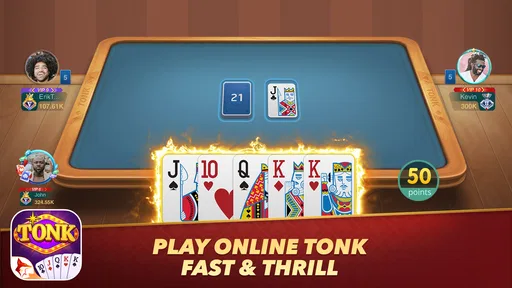
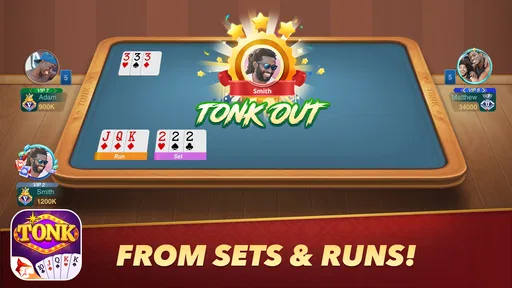
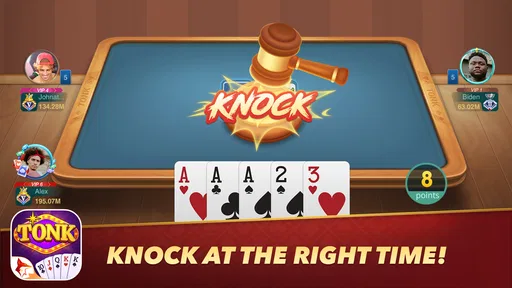

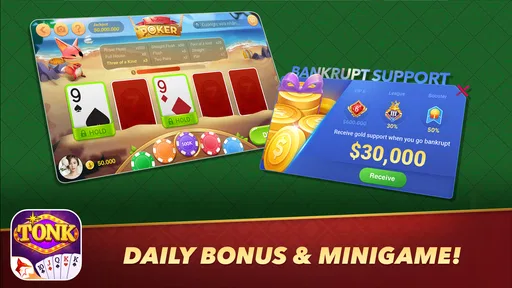
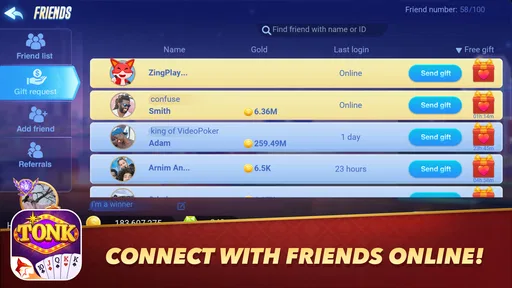
Our Review of Tonk - Classic Tunk ZingPlay
 Analysis by Appyee
Tonk - Classic Tunk ZingPlay is a free card game from VNG ZingPlay Studio that caught my attention because it aims for something much more focused than a large collection of unrelated mini-games. Its store summary, “Game For Us User,” is vague, but the short description identifies the experience more clearly: Tonk. After spending time with it, I see the appeal in its straightforward card-table identity. It is easy to understand at a glance, quick to revisit, and better suited to short sessions than to people looking for a huge, constantly changing game world.
The first impression is helped by the low barrier to entry. The game is free to install, works on Android 8.0 and later, and carries an Everyone 10+ age rating. That makes it reasonably accessible for players who want a casual card title without committing to a large download or a demanding device. Its current version is 1.1, so I approached it as a relatively young release rather than a mature platform with years of accumulated systems.
What the first week feels like
During the first few sessions, the strongest quality is concentration. Tonk is not trying to distract me with an oversized map, a long story, or an elaborate collection of side activities. The card-table format puts the attention on the hand in front of me and the decisions that follow. That simplicity makes it a natural choice for a short break, especially when I want something more interactive than scrolling but less demanding than a full strategy game.
I also like how the format encourages repeated attempts. A single round can feel like a small mental exercise: I look at the cards available, consider which combinations may become useful, and decide whether holding a card is worth the risk of waiting. Even when a hand goes badly, the failure is compact enough that I usually feel ready to try again rather than shut the game down immediately.
That quick restart loop is important for a card game. If every session required a long setup, Tonk would lose much of its practical appeal. Instead, it fits moments such as waiting for an appointment, taking a short lunch break, or relaxing before bed. I would not describe it as a game that replaces a full evening of entertainment by itself, but it can fill small gaps surprisingly well.
My best early use case was playing in short bursts rather than planning a long session. I could open it with a specific intention—play a few hands, test a different approach, then leave. That makes the game feel less like a commitment and more like a pocket card table. Players who enjoy compact rounds and repeated decision-making will probably understand the attraction quickly.
Learning the rhythm instead of chasing every hand
The first useful lesson is that Tonk rewards patience more than frantic action. I found it tempting at the beginning to treat every promising card as something that had to be kept. That approach can make the hand feel crowded and reduces flexibility. A better habit is to think about what the current cards allow while leaving room to react to the next draw.
This is one of the non-obvious strengths of the game: the entertainment comes less from spectacular moments and more from managing uncertainty. I started paying attention to which cards were genuinely helping my plan and which ones were merely attractive possibilities. That distinction gives the game more depth than its simple presentation might suggest.
New players should also resist judging the experience after a single unlucky hand. Card games naturally include swings that are outside the player’s control, and Tonk is more enjoyable when I evaluate my decisions across several rounds. The useful question is not only whether I won, but whether I avoided unnecessary risk, kept my options open, and recognized when a hand was no longer worth forcing.
That mindset makes the opening week more rewarding. Instead of expecting immediate mastery, I treated each round as a chance to refine one small choice. It also helped separate genuine improvement from simple good fortune, which matters in any game where luck and judgment interact.
Who will enjoy the early appeal
I would recommend the first-week experience to players who already like traditional card games, people who prefer rules they can absorb quickly, and anyone seeking a calm competitive routine. It is also a reasonable pick for someone who wants a game that can be played in brief windows without requiring a large narrative investment.
On the other hand, I would not choose it for a player who needs constant novelty. There is no reason to expect a Tonk-focused game to provide the variety of a broad card-game collection, a collectible card battler, or a deck-building adventure. Those alternatives are better when the fun comes from unlocking cards, constructing elaborate decks, or learning several different game modes.
The rating of 4.4 from around 700 ratings suggests that the early experience has connected with a meaningful group of players, while the install count of over 10 thousand shows that it has begun to find an audience. I would treat those figures as encouraging rather than conclusive. A small, focused game can be enjoyable without having the enormous community of a major card platform, but a smaller audience may affect how lively the experience feels over time.
What keeps it useful after the novelty fades
The real test for Tonk is not whether I enjoyed the first few days. Most compact card games can provide that initial spark. The harder question is whether the core decisions remain satisfying after the rules become familiar. In my view, the answer depends heavily on how much the player enjoys repetition with gradual improvement.
For me, the recurring value comes from changing the way I approach a hand. I can play conservatively, protect a flexible set of cards, or accept more risk when the potential payoff seems worthwhile. Those choices create a small but meaningful personal learning curve. The game does not need a new feature every week if the basic decisions continue to give me something to examine.
A useful monthly routine would be to play with a specific focus instead of opening the app aimlessly. One session might be about avoiding unnecessary draws. Another could involve noticing when I am holding a card simply because I like it rather than because it supports a realistic combination. This turns repetition into practice and gives each visit a purpose.
That approach also reveals an important trade-off. Tonk’s value is economical in content but potentially rich in habit. It does not need to offer a large amount of material to remain useful for someone who enjoys the central card challenge. However, a player who measures value by the number of modes, events, or unlockable systems will probably find the experience thin sooner.
A realistic everyday routine
Imagine finishing a commute and having ten minutes before the next task. I would open Tonk, play a few rounds, and stop once I noticed my attention drifting. That last part matters. Because the game is easy to restart, it can become a comfortable default, but short sessions work best when I leave before the decisions become automatic.
Another practical use is as a low-pressure wind-down game. The card format gives me something to think about without demanding the emotional intensity of a competitive action title. Still, I would avoid playing it when I am already tired and impatient. Card decisions can become careless when concentration drops, and a losing run may feel more irritating than relaxing.
For a friend deciding whether to keep it installed, I would suggest a simple test: return to it after the first excitement has gone and see whether you still enjoy making deliberate choices. If you only liked the initial discovery, the game may not earn permanent space. If you find yourself thinking about better ways to manage a hand, it has a stronger chance of becoming a dependable small game.
Free access and spending boundaries
The free price makes trying the game straightforward, but the presence of in-app purchases from $0.99 to $199.99 per item deserves attention. I would not treat optional spending as part of the game’s basic value. Before playing regularly, I would set a personal limit and avoid allowing a frustrating losing streak to influence a purchase decision.
This is especially important in a repeatable card game. The short-session structure can encourage frequent returns, and frequent returns can make small purchases feel harmless when considered individually. I prefer to judge the game on how enjoyable it is without spending. If the core loop does not hold my attention for free, buying something is unlikely to solve the underlying problem.
Parents should also remember the Everyone 10+ rating and the purchase range when deciding whether younger players should use the game. The age label makes it broadly approachable, but a device-level purchase safeguard is still a sensible precaution. That is not a criticism unique to Tonk; it is simply part of using any free game with optional paid items responsibly.
Maintenance, friction, and reasons fatigue can appear
A young card game has a particular maintenance challenge: it needs to preserve a smooth, reliable routine. Players do not necessarily need dramatic additions, but they do need the basic experience to remain comfortable to revisit. With version 1.1, I see Tonk as a game that still has room to establish that long-term rhythm.
For me, the main maintenance burden is personal rather than technical. I have to decide when a session is enough, keep spending separate from frustration, and accept that not every hand will reward the strategy I had in mind. Those habits are easy to overlook because the game itself feels simple. In practice, they determine whether the title remains a pleasant break or becomes a repetitive reflex.
The narrow focus can also create fatigue. Once I understand the basic rhythm, the game’s appeal depends on whether I continue to notice meaningful differences between hands. If every round begins to feel like the same sequence of choices, the lack of broader modes becomes more obvious. This is where a larger card collection may be better for some players: switching between solitaire, rummy-style games, trick-taking formats, or deck-building can refresh the experience in a way a single-format title cannot.
Another source of tiredness is the balance between luck and control. I enjoy uncertainty when my decisions still matter, but I lose interest if a poor result feels impossible to learn from. The best way to handle that tension is to focus on process rather than outcome. Even then, players who want a highly deterministic strategy game should probably choose a different category.
How it compares with familiar alternatives
Compared with a traditional physical card game, Tonk offers convenience. I do not need a table, a deck, or another person ready to play. That makes it useful for solitary downtime and spontaneous sessions. The trade-off is that a digital version cannot reproduce every social element of sitting with friends, reading their reactions, or creating house rules together.
Compared with a broad mobile card collection, Tonk is more focused and less cluttered. That can be a benefit when I know exactly what kind of card experience I want. It is less suitable when I want to jump between several formats without installing another game. A collection app is the better choice for variety; Tonk is the better choice for a dedicated, repeatable card routine.
Compared with collectible card battlers, it asks for a different kind of commitment. I do not approach it as a long-term deck construction project or a card-ownership hobby. That makes it easier to pick up, but it also removes the excitement of building a personalized deck and planning around a large card pool. Players who love preparation and collection will likely find more lasting depth elsewhere.
Finally, compared with offline card play, the digital format is more convenient but potentially less social. I would keep Tonk for solo breaks and quick practice, while choosing a physical game or a multiplayer-focused alternative for an evening centered on conversation. The right choice depends less on which game is “best” and more on whether I want convenience, variety, or shared time.
Who should skip it
I would skip Tonk if my priority were a story campaign, a large progression system, or a constantly expanding set of activities. I would also look elsewhere if I disliked repeating a familiar ruleset or if I needed every session to feel dramatically different. Its focused design is its identity, but that same focus limits its reach.
I would be cautious as well if I tend to spend impulsively in free-to-play games. The purchase range means the game should be approached with a clear boundary from the start. Players who can enjoy the card loop without treating purchases as a way to repair bad luck will be in a better position to judge it fairly.
For everyone else, the decision comes down to tolerance for repetition. If I can return to the same basic card challenge and still find interest in improving my choices, the game can remain useful. If I need frequent new content to maintain attention, the initial appeal is unlikely to last.
My long-term verdict
After looking beyond the first-week novelty, I think Tonk earns a place as a compact card game rather than as an all-purpose mobile entertainment app. Its strongest case is practical: it is free to try, easy to fit into short breaks, and focused enough that I can concentrate on the hand instead of navigating a crowded collection of systems.
Its lasting value depends on the player’s relationship with repetition. I can keep finding interest by reviewing decisions, adjusting risk, and treating each hand as a small exercise in patience. Someone else may reach the limits quickly because the same focused format offers too little variety. Neither reaction is surprising; the game is built around a specific kind of enjoyment.
VNG ZingPlay Studio has positioned this release as a Tonk experience, and that narrow identity is both its advantage and its limitation. The 4.4 average shows that it has made a positive impression among its current audience, but I would not install it expecting a massive card ecosystem. I would install it expecting a simple, repeatable game that may become a useful habit if the core decisions continue to feel worthwhile.
My recommendation is therefore conditional but positive. Try it if you want a focused digital card table for brief sessions, especially if you enjoy learning from small decisions rather than chasing constant spectacle. Keep it installed if you still want to play after the first excitement fades. If you are looking for social atmosphere, broad variety, deep collection mechanics, or a large progression journey, choose a different card game. The lasting test is simple: when the novelty disappears, does managing the next hand still feel satisfying? For the right player, Tonk can answer yes.
Verdict
Strengths of Tonk - Classic Tunk ZingPlay
- Quick matchmaking makes it easy to start a game anytime.
- Simple card gameplay is suitable for beginners.
- Online matches offer a competitive challenge.
- Short rounds work well for quick play sessions.
- The interface is colorful and easy to navigate.
Limitations of Tonk - Classic Tunk ZingPlay
- Requires an internet connection for most gameplay features.
- Ads may interrupt play, especially for free users.
- Random card deals can make matches feel luck-dependent.
- Some features may be locked behind purchases or rewards.
- Online opponents may vary greatly in skill level.
Other Releases by VNG ZingPlay Studio
View All


Similar Picks in This Category
View All
Solitaire - Classic Card Games
MobilityWare4.6

UNO!™
Mattel163 Limited4.3

Spider Solitaire: Card Games
MobilityWare4.6

Solitaire.com - Classic Cards
Tripledot Studios Limited4.7

Plants vs. Zombies™ Heroes
ELECTRONIC ARTS4.1

Hearthstone
Blizzard Entertainment, Inc.4.1
Frequently Asked Questions
What is Tonk - Classic Tunk ZingPlay?
Tonk - Classic Tunk ZingPlay is a mobile card game based on the traditional Tonk, also known as Tunk, rules. The app lets you play against other players or computer-controlled opponents, arrange cards into groups and runs, and try to reduce your hand value before your opponents do. It is designed for quick matches and casual card-game sessions.
How do you play Tonk - Classic Tunk ZingPlay?
At the beginning of a round, players receive cards and take turns drawing and discarding. The objective is generally to form valid combinations, such as sets of equal-ranked cards or sequences from the same suit, while keeping the remaining card value as low as possible. Depending on the selected mode and table rules, players may be able to knock or declare Tonk when they meet the required conditions.
Can I play Tonk - Classic Tunk ZingPlay offline?
Offline availability may depend on the version of the app and the specific game mode. Some card games include practice matches against bots, while competitive tables and social features usually require an internet connection. Before downloading, check the current store description and test whether the app offers a local or single-player mode if playing without Wi-Fi or mobile data is important to you.
Is Tonk - Classic Tunk ZingPlay free to download and play?
The game can generally be downloaded without an upfront purchase, but free access may be supported by advertisements, optional in-app purchases, or virtual currency systems. These purchases can sometimes provide additional chips, bonuses, or cosmetic items rather than changing the basic rules. Review the store listing and your device’s purchase settings before allowing payments, especially if children use the device.
Does Tonk - Classic Tunk ZingPlay require an account or personal information?
The information required can vary according to the platform, login method, and features you choose to use. Basic play may be available through a guest profile, while online competition, progress synchronization, leaderboards, or social functions may request an account or connection to a third-party service. Check the app’s permissions and privacy policy so you understand what data may be collected before creating a profile.
Play our best games!


